• Skip to main content
  • Skip to primary sidebar

Out now! Read the Spring 2025 edition of Rank Ripples magazine.

Rank-Foundation-Logo
  • About Us
    • Our People
    • Partnerships
    • Our Data & Impact
    • Work with us
  • Our Approach
    • Community
    • Enterprise
    • Leadership
    • Faith
  • Where We Work
    • Dundee
    • Sunderland
    • Plymouth
  • Coworking Space
  • What’s New?
    • News
    • Podcast
    • Magazine
  • Contact
Sign in to RankNet
Search field required
Rank-Foundation-Logo
  • About Us
    • Our People
    • Partnerships
    • Our Data & Impact
    • Work with us
  • Our Approach
    • Community
    • Enterprise
    • Leadership
    • Faith
  • Where We Work
    • Dundee
    • Sunderland
    • Plymouth
  • Coworking Space
  • What’s New?
    • News
    • Podcast
    • Magazine
  • Contact
Sign in to RankNet

inclusive leadership

Celebrating Inspiring and Inclusive Leadership at The Rank Foundation Conference 2024

November 28, 2024 by Nhung Phung Leave a Comment

The Rank Foundation’s 2024 Conference in Manchester provided Network members a space to reflect on the social sector’s progress and challenges while highlighting the enduring significance of leadership in driving change.  

David Sanderson, Chief Executive of The Rank Foundation, opened by reflecting on the past two decades, tracing the Foundation’s evolution from work in Burnley in 2003 to present-day initiatives across the UK. Back then, challenges such as overcrowded prisons, a strained criminal justice system, and community tensions demanded immediate attention. 

Two decades later, many of these issues persist, compounded by over a decade of austerity. Yet the Rank Foundation and its Network have adapted and grown into a UK-wide force for positive change. 

David said: 

“Here we can talk of a ‘hard edged hope’ – not the soft, idealistic perceptions that some might have about the sector – but of a hope sharpened and honed by the realities of operating in a challenging and sometimes unforgiving environment, where giving up is not an option. 

The social sector is an engine room of strong, inspiring and inclusive leadership, and it is entirely fitting that this is the focus of this year’s conference.” 

Leadership as the cornerstone of change 

The conference’s theme, ‘Great Leaders Grow Together’ was inspired by the selfless and determined leaders within The Rank Foundation’s Network. From flagship programmes like Time to Shine and Rank Aspire to place-based projects in cities like Plymouth and Sunderland great leaders emerge, develop, connect communities, drive collaboration, and build resilience. 

This year’s conference also explored the critical need for inclusive leadership to connect teams and empower individuals. Seminars and discussions underscored the importance of encouraging diverse perspectives for effective decision-making. 

Learning from established and emerging leaders 

Rank’s team are very grateful to the many people who contributed to the conference this year. It couldn’t happen without their generosity, expertise and creativity.  

Guests agreed, with 95% saying speakers were either “extremely” or “very” engaging. 

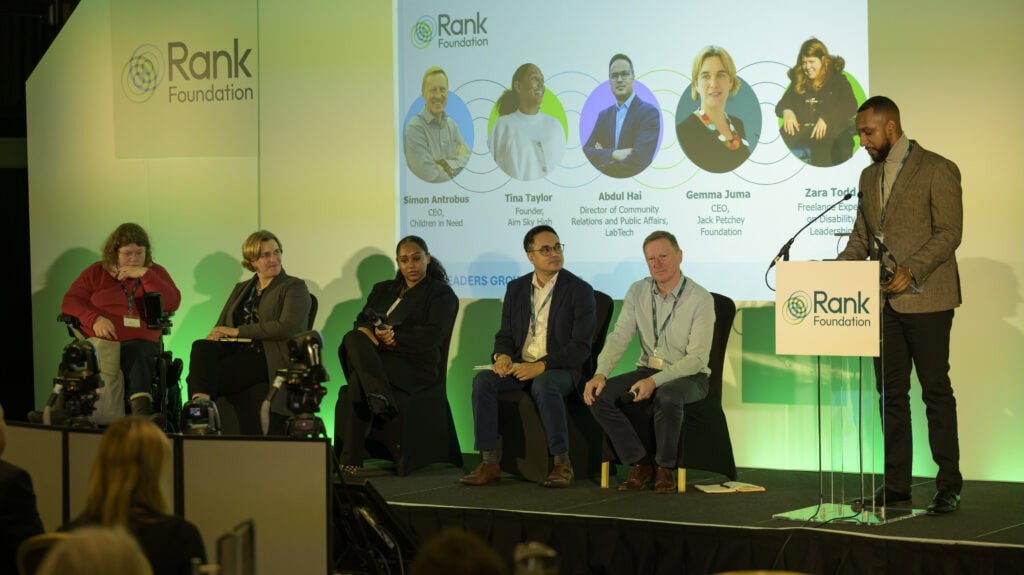
The opening panel, hosted by Jordan Ignatius, Managing Director of Reaching Higher, included Abdul Hai OBE, Director of Community Relations & Public Affairs at LabTech London Limited; Tina Taylor, Founder of Aim Sky High; Gemma Juma, CEO of Jack Petchey Foundation; Simon Antrobus, CEO of Children in Need; and Zara Todd, an activist and Co-founder of the European Network on Independent Living.
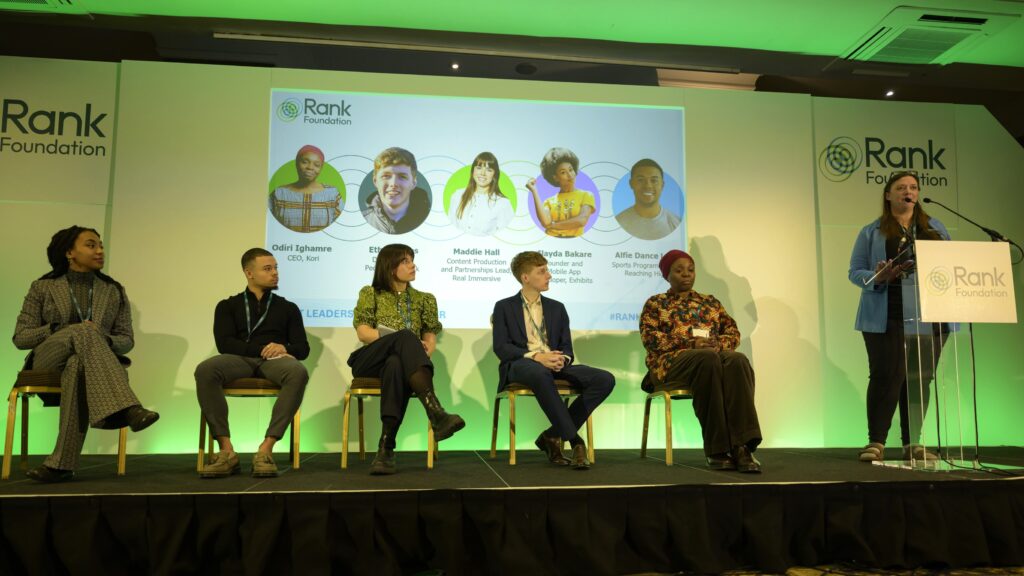
Day two’s panel, hosted by Helen Kerr, Head of Business Development at WOMEN’STEC, featured Alfie Dance-Laing, a participant in the Rank Aspire programme; Maddie Hall from the Pushing Boundaries programme; Ethan Jones from the Time To Shine programme; Ilayda Bakare, a former School Leadership Award holder and current member of the Fellowship Leadership Team; and Odiri Ighamre, CEO of KORI, a recipient of our Major Grant. 
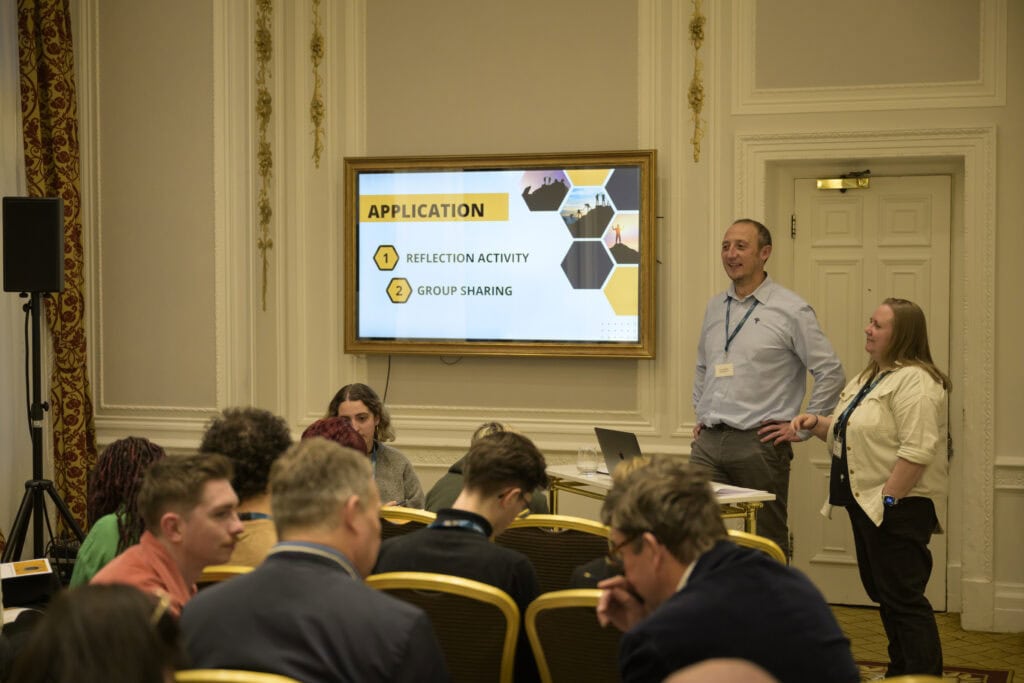
Seminars included: 

  • Shazia Ur-Rehman and Alison Green, CTVC, on telling a charity’s story in multiple ways 
  • Tony Silcock, Youth Initiatives, on faith in leadership 
  • Emma Pears, SELFA, on growing leadership 
  • Sam Anderson and Doctor Amanda Wootton, Social Action Enquiry Scotland, on learnings in leadership 
  • Precious Babatunde, Speakers Trust, on leading with your voice 
  • David Walsh, The Advantage Foundation, a conversation about learning from Rank’s Start Here enterprise programme in Northern Ireland  
  • Zam Zam Yusuf and Harvinder Poonian, on unlocking the secrets to effective community support in youth development. 
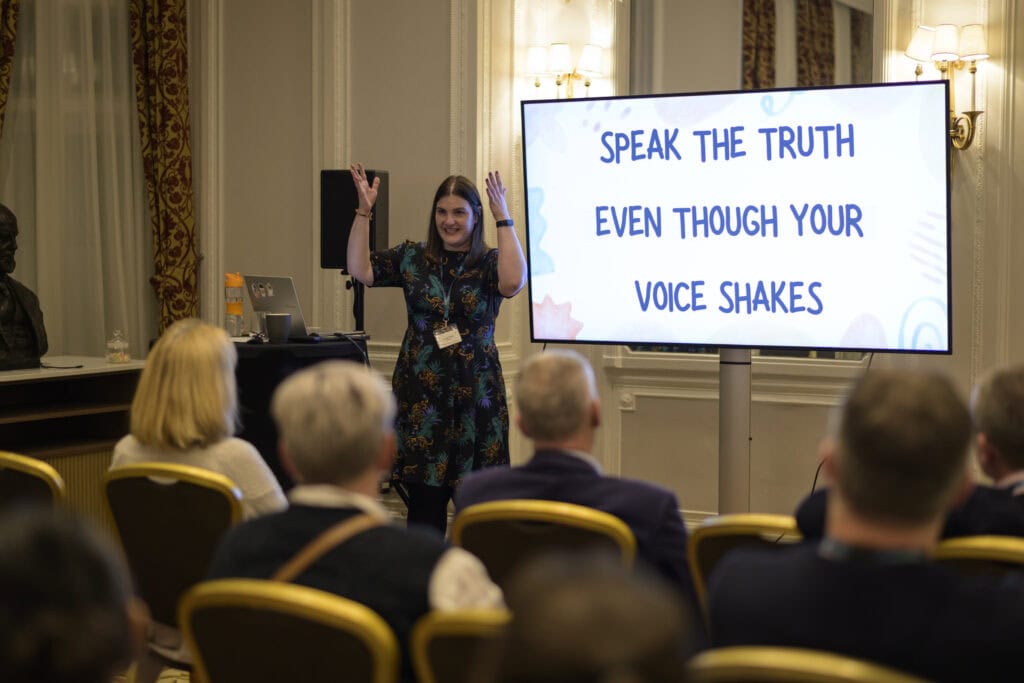
As usual guests were entertained and inspired by the graduates of the Time to Shine and the Rank Aspire programmes who showcased their journeys in creative ways. Participants of Pushing Boundaries for emerging leaders also shared their experience of this new programme. 

The evening keynote speaker was Julie Hesmondhalgh who inspired everyone with her speech. David introduced the esteemed actor, writer, and activist, highlighting her role as an ambassador for fairness and equality. 

Julie’s speech addressed the alarming decline in funding for arts education, stressing the sector’s significant contribution to the UK economy and its vital role in empowering young people and fostering community resilience. She discussed the transformative power of the arts in various social contexts and advocated for a leadership style rooted in vulnerability, humility, and empathy. 

Julie concluded with advice on embracing failures and valuing diverse perspectives, underscoring the balance between essential needs and the enrichment that culture brings to social justice efforts: 

“I truly believe in the words of the old song we need bread but we need roses too. This is especially important to remember when working in the fields of social justice, poverty and need in building a better world – and surely that has to be the number one aim here – we need not just to think about helping people to survive, but also to thrive. We all have a right to food and shelter, and education and health, but we have a right to beauty and joy too. The bread and the roses.” 

A shared vision of the future  

The conference celebrated the power of connection, the strength in diversity, and the enduring need for collaboration.  

Reflecting on the conference a participant explained what they valued was: 

“Being able to meet with others, share practice, catch up with people I know and make new connections. Having the space away from work to get creative and start thinking beyond my work environment, which often stifles these opportunities, as constantly fire-fighting. Feeling valued and that we’re not invisible.” 

Another said: “It would be helpful to bottle the conference, so I can keep topped up during the year. Have a shot of Rank Network inspiration and ‘crack on’ again.” 
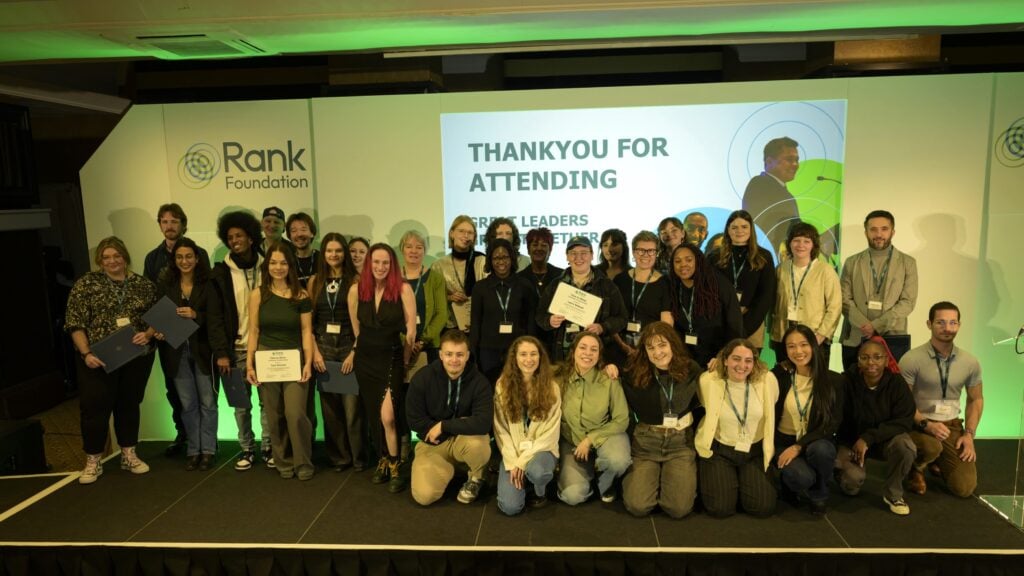
To keep the energy and inspiration alive, you can: 

  • Listen to The Ripple Effect – a podcast about Rank’s thriving Network of leaders 
  • Read the latest edition of Rank Ripples which is all about inclusive leadership 


View the full album from the Conference:

Filed Under: Leadership, News, RankNet Tagged With: inclusive leadership, inspiring leadership, leadership, rank conference

Ripples Story: “Giving a Voice to Everyone”

November 4, 2024 by Nhung Phung Leave a Comment

In this article, Aimee Thorpe Mundt, Community Development and Engagement Assistant at the Why Not? Trust, explores what it means to lead inclusively and how it can create a workplace where everyone, regardless of background or experience, has equal opportunities to thrive. 

Inclusive leadership helps a workplace to run smoothly and fairly, and in this article, I explore what it means to me. Inclusive leadership allows people with different life experiences to have a voice and share their valuable opinions. It ensures that no matter who you are, what you look like, what your beliefs are, or where you are from, you have equal opportunities within your workplace.

I work with the Why Not? Trust for care-experienced people. This group often experiences stigma and discrimination for various reasons, including, but not limited to, the idea that they did something wrong and that’s why they were in care, that they are troubled or troubled, and that they are broken or unfixable, so not worth the effort.

It is important to note that most people who enter the care system do so through no fault of their own. Inclusive leadership within my workplace brings us all together to work towards the same goal: ensuring that care-experienced parents and students have the support they need to thrive.

Inclusive leadership is flexible

One way we’ve made the workplace more inclusive is through hybrid working. Most of us work from home and attend in-person events when required. This ensures everyone has an equal opportunity to a good home and work-life balance, which means everyone can bring their best selves to support the people we work with. Personally, I am experiencing some health issues and undergoing health testing. Workplace flexibility ensures that I can attend appointments. I am not scrambling to make up work hours at random and unsocial hours.

In turn, this means that I’m as healthy and rested as possible when I’m working instead of feeling more unwell from feeling overworked and tired! This is offered to all staff, and I see its benefits.

Inclusive leadership allows all voices to be heard

As a care-experienced person myself, and the only person on my team to be a part of The Village – a digital community for new parents and parents-to-be with experience of care – as a Villager (person who is a care-experienced parent) and as a staff member, I need my voice to be heard. Although I am the minority in the room, my direct experience of the care system is valued highly, as my experiences can directly inform the work that we are doing.

Within staff meetings, our leadership gives each member of staff time to share what they’ve been doing and ask for support with anything that’s needed. Within my assigned project, Wee Campus, which supports care experienced students in further and higher education, we allow opportunities for equal participation; I have developed a private Facebook group to allow students to connect, share and support each other. We have a weekly drop-in session online to allow students to come and talk to us, ask questions, get support, or let off some steam.

Fostering this idea of inclusive leadership allows me to participate in my workplace and project this inclusion onto those I work with. Making as many opportunities as possible to allow voices to be heard is what makes The Why Not? Trust operates so smoothly.

Filed Under: Leadership, RankNet Tagged With: EDI, inclusive leadership, leadership

Ripples Story: “Inclusive Leadership is Essential to Social Sector”

November 3, 2024 by Nhung Phung Leave a Comment

In this article, Jen McKevitt, Rank’s very own Associate Director for Sunderland and the North East, describes how inclusive leadership is fundamental to the work of social leaders in the voluntary, community and social enterprise (VCSE) sector, and offers some strategies to achieve it.

Inclusive leadership is fundamental to our work as social leaders in the voluntary, community and social enterprise (VCSE) sector. Many of us might believe that inclusivity is part of our ideological make-up, social sector DNA, and raison d’etre. It is a cornerstone for addressing social inequity and structural inadequacies, building social capital, increasing community resilience and regenerating left-behind communities.

Many of us work hard year in and year out to build inclusive communities, but is it becoming more challenging? Are the issues and needs changing? Might it be argued that what’s been happening in some of our communities in terms of racially motivated hate crime and mob violence requires us to pause, reflect and rethink?

Truly inclusive leadership, particularly in communities of place, is arguably even more essential than ever in building cohesive, resilient and sustainable communities. Recognising and combating hate crime, fear, xenophobia and racially motivated hate crimes, such as those seen in many of our communities recently, must be part of that developmental process. Creating welcoming and inclusive environments, as many community anchor organisations have done for decades, provides a solid platform to help us serve our communities, make informed decisions, and achieve lasting impact.

But as social leaders, should we be doing more? Do we fully understand our communities, and are we taking account of demographic changes? What is shifting? Have tensions been building? What can we do to acknowledge a possible increase in fear and distrust? What can we do to remove barriers and build cohesion?

How can we build inclusive leadership in communities affected by hate crime?

Above: Jen, left, with Rank’s trustees and Sunderland-based Network members

Some of us may remember the days when there was the odd seasonal ‘quiet spell’, when we had a chance to pause, reflect, consider environmental, social and economic changes, consult, plan and garner resources to meet new needs. That luxury seems to be a thing of the past, but, as we did during COVID-19, a strength of the VCSE is our ability to recognise shifting needs and do what’s required because we simply should. Inclusive leadership is crucial in areas that have experienced hate crimes and riots. It fosters unity, trust, and understanding, which is essential for healing and preventing future incidents. Here are some strategies to consider:

Create space and empower staff, volunteers and trustees to reflect and question assumptions

  • Foster open dialogue and encourage respectful exchange of thoughts, ideas and understanding.
  • Use inclusive language that avoids stereotypes and biases.
  • Explore unconscious bias and reaffirm socially equitable value systems.

Engage those who are marginalised, demonstrate empathy and understanding through

  • Active listening to demonstrate a genuine interest in understanding the experiences and perspectives of individuals from diverse backgrounds.
  • Recognise and validate the emotions of those affected by hate crimes/riots.
  • Show respect for different cultures, beliefs, and values.
  • Promote equity and fairness in policies and practices. For example, build a pipeline of inclusive talent development by empowering individuals from diverse backgrounds to develop their skills and take on leadership roles.

Education and awareness

  • Educate the community about hate crimes and their impact. Promote education and peacebuilding initiatives to address underlying causes of conflict.
  • Promote tolerance and respect for diversity.
  • Provide training, mentoring and guidance in a supportive, non-judgemental environment.
  • Train individuals to intervene safely when they witness hate crimes or discriminatory behaviour.
  • Actively seek input from marginalised people to shape services and inform decision-making.

Organise inclusive services and events

  • Bring people together from diverse backgrounds and seek their input in planning and delivery
  • Reach out to and support all marginalised people.
  • Collaborate and build partnerships with community organisations that work with refugees, asylum seekers and immigrants, faith leaders, and other stakeholders to build bridges and foster unity.

Rank’s network of leaders can create or rebuild vibrant, resilient, and equitable communities by fostering trust, empowerment, and social infrastructure.

Filed Under: Leadership, RankNet Tagged With: EDI, inclusive leadership, leadership, resilient communities, social impact, social sector, unity, VCSE sector

Ripples Story: “Creating Opportunities”

November 2, 2024 by Nhung Phung Leave a Comment

In this article, Emma Pears, Founder & CEO of SELFA, explains how she creates opportunities for people to do great things. For Emma, inclusive leadership is about creating an environment where people feel safe to do their best work.

It took me a long time to see myself as a leader. Traditional models of leadership weren’t really something I identified with: those that told a narrative that people born into strong families of leaders are also destined to be leaders or that leaders are people who outline tasks and goals to their team and tell them how to achieve them.

I see myself more often as an inclusive leader who creates opportunities for people to do great things. It’s not about dictating, sending down orders, or micromanaging. It’s about creating an environment where people come in and really want to do their best work.

At SELFA Children’s Charity, our vision is a community where children and young people are celebrated and know they belong. I feel that if we celebrated each other more as a society, the world would be a better place! That, to me, is what inclusive leadership is all about—celebrating others and creating cultures where people feel safe to be responsible for their actions.

Very rarely do I feel like I need to lead from the front; one of the few times was during the global pandemic in 2020. People were looking to me for answers in a very scary world, and I needed to give them the safety and security that I was there for them as a leader. Even though I did not have all the answers, I showed that it was OK to be a vulnerable leader who would ensure that we got through those difficult times together.

However, most of the time, I lead from behind and let the SELFA team, our children, and young people get on with it. I honestly believe that is why our team is so strong.

When people come into our organisation, they often don’t know who the CEO is immediately because we are all celebrated as leaders and trusted to do our jobs. We are here to serve our children and young people, help amplify their needs, and support them in finding solutions to the issues they face.

Above: Emma with two young SELFA clients

Relationships are at the centre of everything I do, so the most important thing I do as a leader is to connect with other people and build a foundation of trust. Before people decide whether they want to put their trust in SELFA, they first decide what they think of me. They judge me—they think, “Can I trust this person?”

Lived experience leadership

I also think my lived experience is a really important part of who I am as an inclusive leader. Whether it is as the mother of a child with mental health support needs, the daughter of an alcoholic, or a single mum for nearly a decade, all of these have been great roles in which I’ve practised the traits of inclusive leadership. It helps me advocate for children and young people who have also faced similar experiences and support them to become inclusive leaders within our community.

I still make mistakes pretty much every day! These days, I question my ideas rather than who I am. I am comfortable saying things like, “I’m sorry I didn’t see it that way; you’ve made me change my mind.” I try to de-stigmatise failure by stating up front that it’s OK to get things wrong, and I use language like, “This is the messy part where learning takes place,” rather than finding blame for “mistakes.”

I admit that I don’t have all the answers, and I ask other people to help me come up with them. By asking open questions, I actively listen to understand rather than respond.

The best legacy I can leave as an inclusive leader is when children and young people exercise authority over themselves and others; developing their leadership skills is at the heart of everything I do.

Filed Under: Leadership, RankNet Tagged With: inclusive leadership, leadership, SELFA

Ripples Story: “Social Benefits of Leadership”

November 1, 2024 by Nhung Phung Leave a Comment

In this article, Abdul Hai OBE, Director of Community Relations and Public Affairs at LabTech, shares powerful insights on inclusive leadership and its role in building stronger, more equitable communities, drawing from his extensive knowledge and experience across the Voluntary and Community Sector (VCS), local government, and the corporate world.

What Does Inclusive Leadership Mean to Me?

To me, inclusive leadership means connecting with people and communities while remaining open to opportunities. It involves uniting individuals around a shared vision whenever possible and making decisions based on data, facts, and lived experiences rather than relying on instincts or conscious and unconscious biases. Such biases often lead to missed opportunities for meaningful change.

I believe that the essential traits of an inclusive leader include humility, an open mindset, curiosity, adaptability, courage, and empathy. Inclusive leaders inspire, challenge, and lead by example, creating momentum and bringing people along on the journey for change.

Inclusion goes beyond diversity and equality; equity must also be considered when it is the right course of action. A conducive environment allows individuals and teams to flourish and grow together, fostering autonomy, openness to dissenting opinions, and a sense of fulfilment.

Does Inclusive Leadership Matter?

Absolutely. Inclusive leadership matters because it ensures everyone’s knowledge, skills, and experiences are valued, utilised, and embraced. Together, we achieve more than we do individually.

Inclusive Leadership in action

When I first learned about the spread of COVID-19 across London and the UK, I realised that my role as a community leader and lead councillor would be essential in supporting local communities and helping to save lives in the London Borough of Camden. It soon became clear that the virus disproportionately impacted residents from Black, Asian, and other ethnic backgrounds.

In March 2020, my brother tested positive for COVID-19, and my elderly mother exhibited symptoms. I shared the pain that many families across the UK experienced due to the inability to visit loved ones.

COVID-19 exposed deep structural inequalities in the UK. Recognising the need for urgent action, I worked with the Director of Public Health for the London Boroughs of Camden and Islington to establish a working group. We implemented a six-week programme to review the disease’s disproportionate impact on ethnic minority communities. Our goal was to quickly gather evidence and take immediate action to protect residents while developing a long-term call to action for substantive change. We explored a wide range of issues, including health and employment, and sought to understand the underlying factors better.

In August 2020, we launched the “Building Equal Foundations” report, which presented our findings and outlined a plan of action to tackle racial inequalities in Camden. The report reflects input from councillors, senior officers, health practitioners, schools, young people, and community members. The Local Government Association (LGA) recognised the work as good practice. I chaired a cross-party Race and Equality Working Sub-Group to hold the Council and its partners accountable for implementing the report’s recommendations.

Above: Abdul with Mayor of London, Sadiq Khan

In 2017, Camden experienced a surge in knife crime, becoming the highest in London. Deeply concerned by this trend, we believed a community-led response was necessary. I co-chaired the Camden Youth Safety Taskforce (2017-2023) with Keir Starmer, then the local MP, to investigate the causes of youth violence in the borough and develop a coordinated response. We brought together schools, Public Health, businesses, the police, young people, and community groups with the desire to improve youth safety. We firmly believe that no young person should feel unsafe in their community. However, what became clear to us while leading this work is that for some young people, fear of crime and violence has become a daily reality. Our goal was to change that.

In 2018, Camden’s Youth Safety Steering Group was established to oversee and deliver the 17 recommendations made in the Youth Safety Taskforce Report. These recommendations aimed to reduce youth violence and keep young people safe by adopting a public health approach. By proactively engaging with at-risk youth, collaborating with the police, and providing trauma-informed support in schools, youth clubs, and on the streets, we have delivered significant reductions in knife crime in Camden.

The Mayor of London has invested £3 million across the city to implement the Engage Youth diversion programme developed by the Taskforce. This programme supports young people in police custody through youth workers and health practitioners. Additionally, the government has pledged £100 million towards the Young Futures programme, designed to tackle knife crime based on the Youth Safety Taskforce model.

Ultimately, inclusive leadership is not about mere words – it is about driving forward the change needed to deliver our desired outcomes.

Filed Under: Leadership, RankNet Tagged With: Camden, COVID19 response, EDI, empowering youth, equity in action, inclusive leadership, VCSE sector

Primary Sidebar

Recent Posts

  • Rank Network visit to Northern Ireland: Backing local leaders, building stronger communities
  • Rank Ripples – Spring 2025 Edition
  • Ripples Story: “Investing in Experience”
  • Blog Post: “­My time at the Rank Foundation: Supportive Leadership”
  • Blog Post: “A New Chapter – My First Steps as a Time to Shine Leader”

Recent Comments

  1. Covid19: Funding support available in Torfaen | TVA - Torfaen Voluntary Alliance on COVID-19 Update

Archives

  • May 2025
  • April 2025
  • March 2025
  • January 2025
  • December 2024
  • November 2024
  • October 2024
  • September 2024
  • August 2024
  • July 2024
  • June 2024
  • May 2024
  • April 2024
  • March 2024
  • February 2024
  • January 2024
  • December 2023
  • October 2023
  • August 2023
  • July 2023
  • June 2023
  • May 2023
  • April 2023
  • March 2023
  • January 2023
  • October 2022
  • May 2022
  • April 2022
  • February 2022
  • January 2022
  • November 2021
  • October 2021
  • April 2021
  • December 2020
  • November 2020
  • October 2020
  • September 2020
  • August 2020
  • July 2020
  • June 2020
  • May 2020
  • April 2020
  • March 2020
  • October 2019
  • August 2019
  • July 2019
  • May 2019
  • April 2019
  • March 2019
  • January 2019
  • December 2018
  • October 2018
  • August 2018
  • July 2018
  • May 2018
  • April 2018
  • March 2018
  • February 2018
  • July 2017
  • May 2017
  • March 2017
  • January 2017
  • December 2016
  • November 2016
  • October 2016
  • September 2016
  • August 2016
  • July 2016
  • June 2016
  • May 2016

Categories

  • Community Action Placement
  • Coworking Space
  • Dundee
  • Enterprise
  • Fellowship
  • Hull
  • Leadership
  • News
  • Place-based News
  • Plymouth
  • Profit for Good
  • Rank Aspire Programme
  • RankNet
  • School Leadership Award
  • Start Here
  • Sunderland
  • Time to Shine

Language

  • Cymraeg
Rank-Foundation-Logo
  • About Us
  • Our Approach
  • Where We Work
  • Coworking Space
  • News
  • Contact
Sign in to RankNet

For enquiries about our
Coworking Space in London:

booking@rankfoundation.com

For Rank Network members:

ranknet@rankfoundation.com

For all other enquiries:

contactus@rankfoundation.com Please note we don't accept unsolicited applications for funding.

© 2026 The Rank Foundation.
All rights reserved.

Privacy Policy  Cookies  Complaints Policy

Made by erjjio and powered by
100% renewable energy

Green_Website_Black (2)
Manage Consent

To provide the best experiences, we use technologies like cookies to store and/or access device information. 

Functional Always active
The technical storage or access is strictly necessary for the legitimate purpose of enabling the use of a specific service explicitly requested by the subscriber or user, or for the sole purpose of carrying out the transmission of a communication over an electronic communications network.
Preferences
The technical storage or access is necessary for the legitimate purpose of storing preferences that are not requested by the subscriber or user.
Statistics
The technical storage or access that is used exclusively for statistical purposes. The technical storage or access that is used exclusively for anonymous statistical purposes. Without a subpoena, voluntary compliance on the part of your Internet Service Provider, or additional records from a third party, information stored or retrieved for this purpose alone cannot usually be used to identify you.
Marketing
The technical storage or access is required to create user profiles to send advertising, or to track the user on a website or across several websites for similar marketing purposes.
Manage options Manage services Manage {vendor_count} vendors Read more about these purposes
View preferences
{title} {title} {title}