• Skip to main content
  • Skip to primary sidebar

Out now! Read the Spring 2025 edition of Rank Ripples magazine.

Rank-Foundation-Logo
  • About Us
    • Our People
    • Partnerships
    • Our Data & Impact
    • Work with us
  • Our Approach
    • Community
    • Enterprise
    • Leadership
    • Faith
  • Where We Work
    • Dundee
    • Sunderland
    • Plymouth
  • Coworking Space
  • What’s New?
    • News
    • Podcast
    • Magazine
  • Contact
Sign in to RankNet
Search field required
Rank-Foundation-Logo
  • About Us
    • Our People
    • Partnerships
    • Our Data & Impact
    • Work with us
  • Our Approach
    • Community
    • Enterprise
    • Leadership
    • Faith
  • Where We Work
    • Dundee
    • Sunderland
    • Plymouth
  • Coworking Space
  • What’s New?
    • News
    • Podcast
    • Magazine
  • Contact
Sign in to RankNet

Plymouth

Blog Post: “On the ground in Plymouth – Creating ripples of change through repayable grants”

September 23, 2024 by Nhung Phung Leave a Comment

Blog post by Nhung Phung, Communications and Impact Officer, The Rank Foundation

Plymouth, known for its maritime history and vibrant communities, is home to a network of innovative social enterprises that are transforming local life. Last week, I had the privilege of travelling to this beautiful coastal city, where I joined Phil (our Associate Director for Plymouth) and Caroline (our Deputy CEO) to meet some of the remarkable organisations supported through our repayable grants programme. By leveraging the programme’s favourable loan conditions, these organisations are tackling social, environmental, and economic issues head-on to create ripples of impact in their communities.  

Our Rank Network is thriving in Plymouth. What struck me most during this visit was the city’s strong sense of community. The friendliness and passion for making a difference were palpable at every organisation we visited: Trevi, Pollenize CIC, Nudge Community Builders, and Four Greens Community Trust.  

Trevi: A lifeline for vulnerable women and children 

Our first stop was Trevi, a women’s charity that provides safe spaces for women and their children to recover from trauma, particularly those affected by domestic violence, substance misuse, and mental health challenges.  

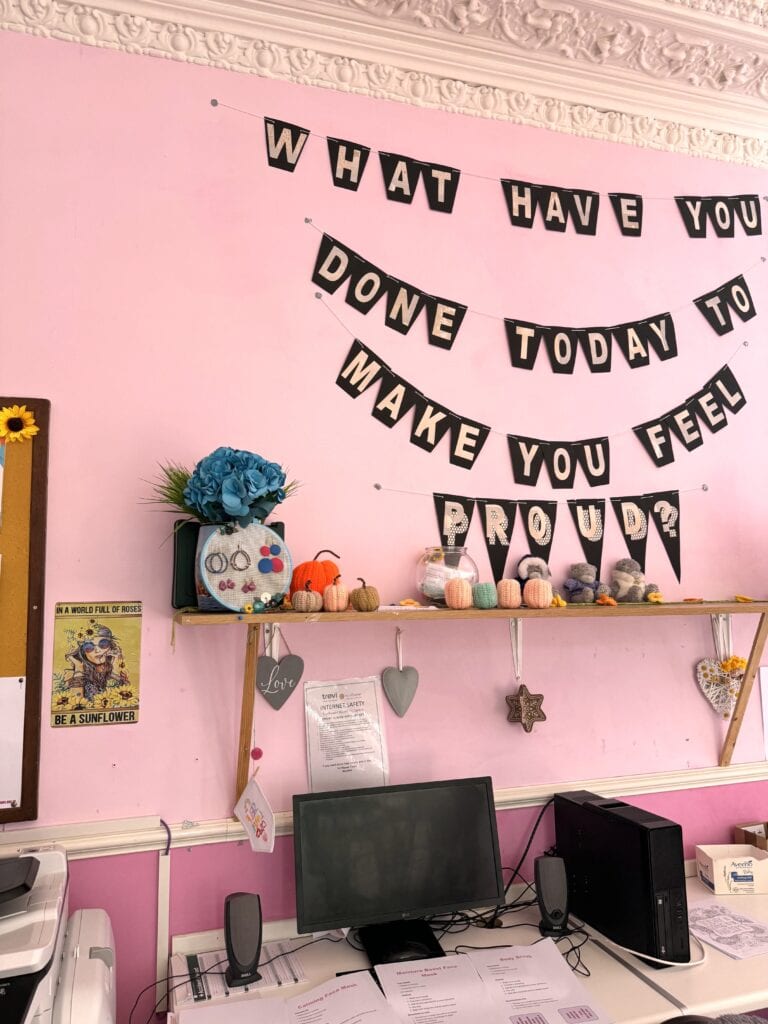
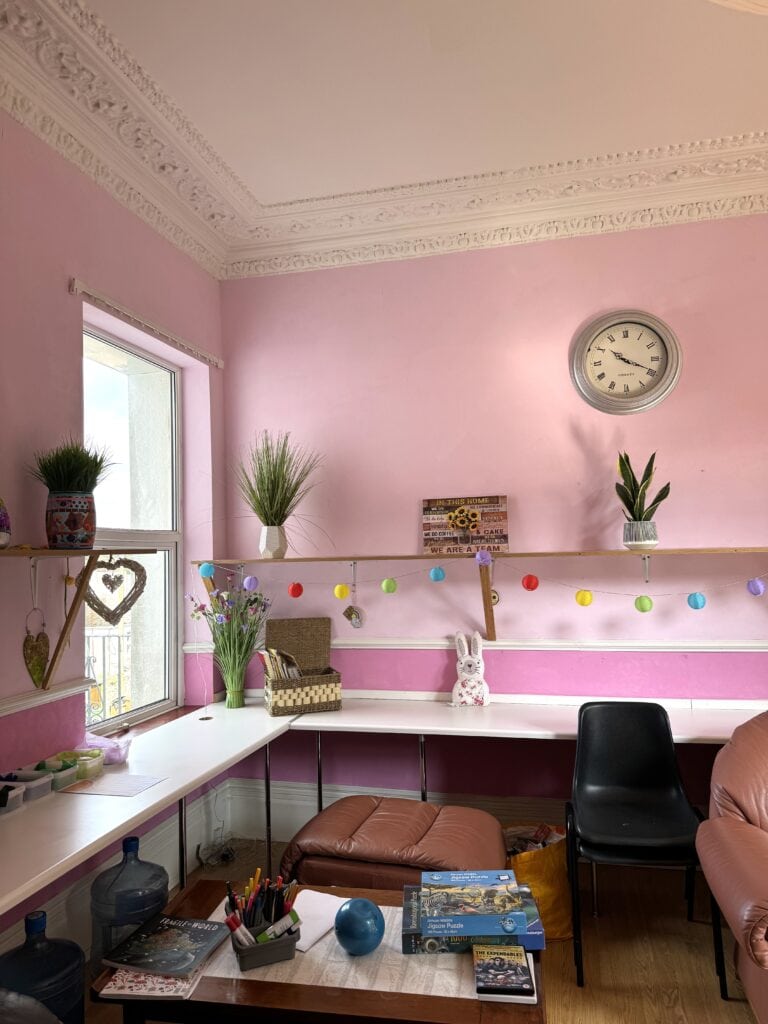
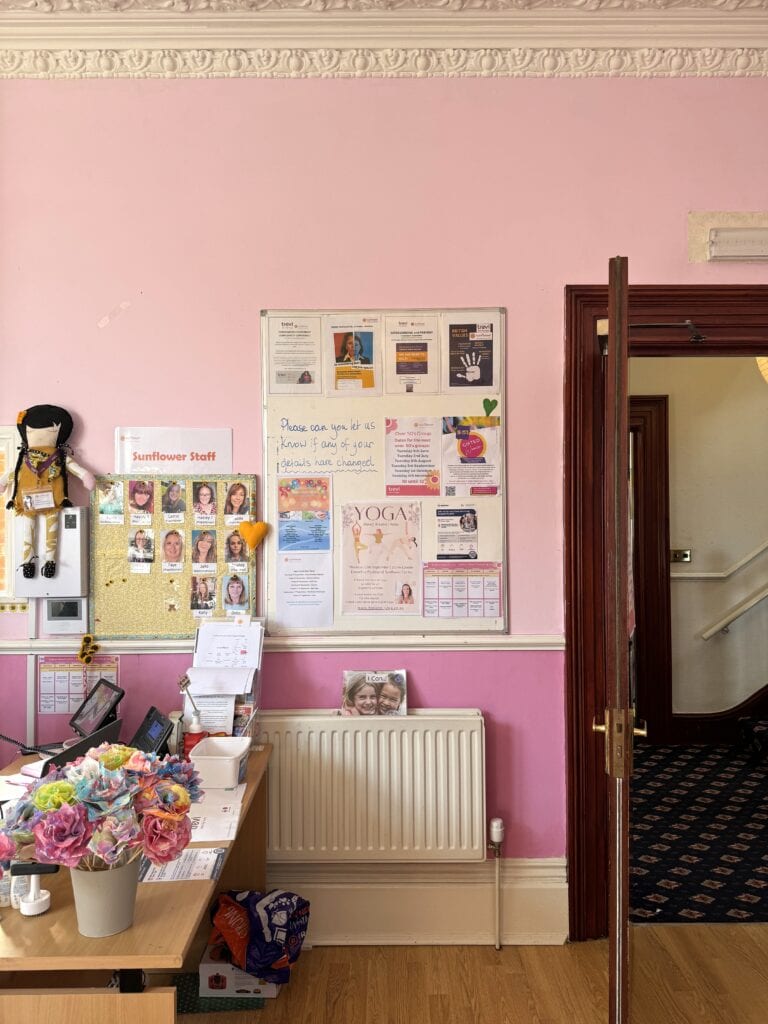
The first thing that caught my eye was the vibrant atmosphere of Trevi’s office, known as the Sunflower Centre. Decorated with cheerful sunflower motifs, the space was as bright and welcoming as the staff who greeted us. Hayley, Victoria, and Laura made us feel right at home with their genuine warmth and enthusiasm. 
Trevi received £65,000 from our repayable grants programme to help purchase Blossom House, a key part of their strategy to create a dedicated space for. This investment, along with additional funding, enabled them to buy and refurbish the property. 

Blossom House, named with the same care as Trevi’s other services like the Jasmine Mother & Child Centre, Daffodil Family Centre, and the Sunflower Women’s Centre, serves as a vital refuge where women can find rest, peace, and security while taking positive steps in their journey of recovery from trauma and abuse. Without this space, many women would be trapped in unsafe environments and face ongoing risks of domestic violence, substance misuse, and homelessness. Blossom Women’s House also offers a range of activities and interventions to help women build the skills and social connections needed to thrive in the community. 

Reflecting on their experience, Hayley emphasised how crucial the repayable grant was to their success: “Without that catalyst from Rank, we wouldn’t have achieved this level of success. The funding wasn’t just about the money; it was about the two-way relationship with Rank. The support from Rank, including bursaries, conferences, and networking opportunities, has been invaluable in helping us bloom and thrive.” 

They also highlighted the importance of local connections, which helped them secure funding smoothly and quickly. The interest-free nature of the grant alleviated some financial concerns, allowing them to focus on their mission.  

Nudge Community Builders: Breathing new life into old spaces 

Leaving Trevi’s Sunflower Centre, we visited Nudge Community Builders. We were joined by David, our CEO, and had a warm and insightful conversation with Wendy, Nudge’s co-founder, at their base, ‘The Plot’. 

Nudge’s mission is simple yet powerful: “empty buildings are not okay, they need a little Nudge.” Their goal is to breathe life into these neglected spaces and turn them into thriving community hubs. Since 2017, Nudge has been working hard to transform Union Street, once filled with derelict properties, into a space the community can be proud of.  

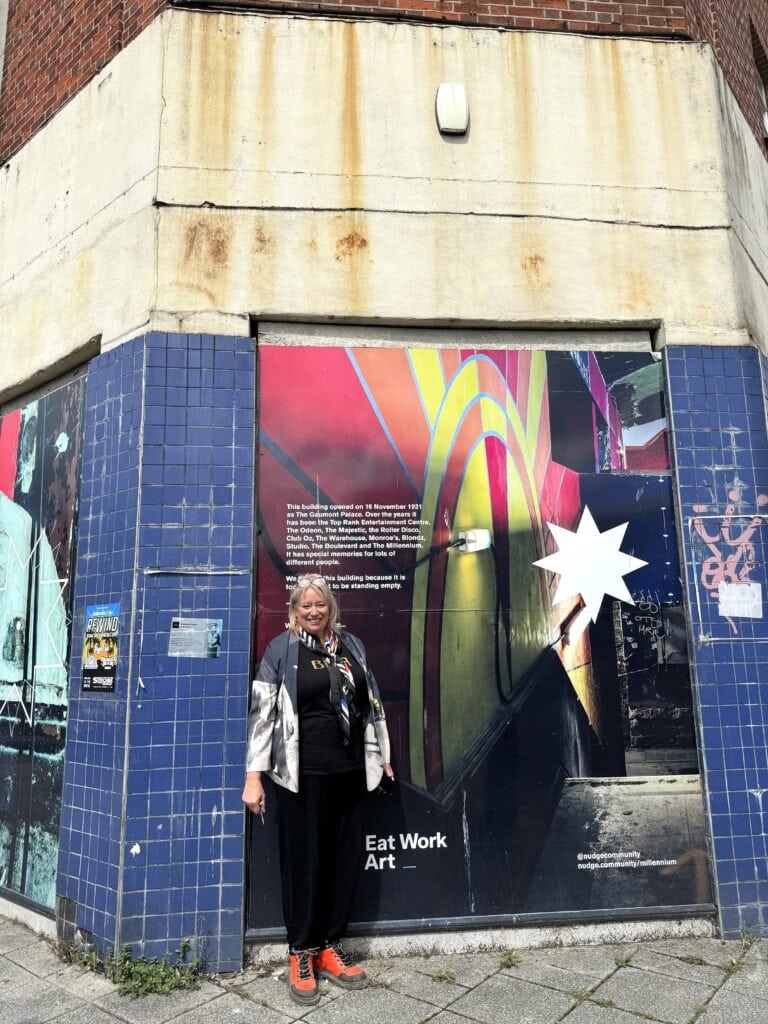
Wendy showed us one of their key achievements that holds deep historical significance for the local community: The Millennium Building. She explained that this landmark project was made possible thanks to a £285,000 repayable grant from Rank. There’s something poetic about the fact that this former cinema was once the Top Rank Entertainment Centre in the 1960s. The connection to Rank adds a layer of history and purpose to the project, as the building comes full circle, once again becoming a space for the community. When we arrived, a band was already there rehearsing for their upcoming performance at London’s Notting Hill Carnival.  
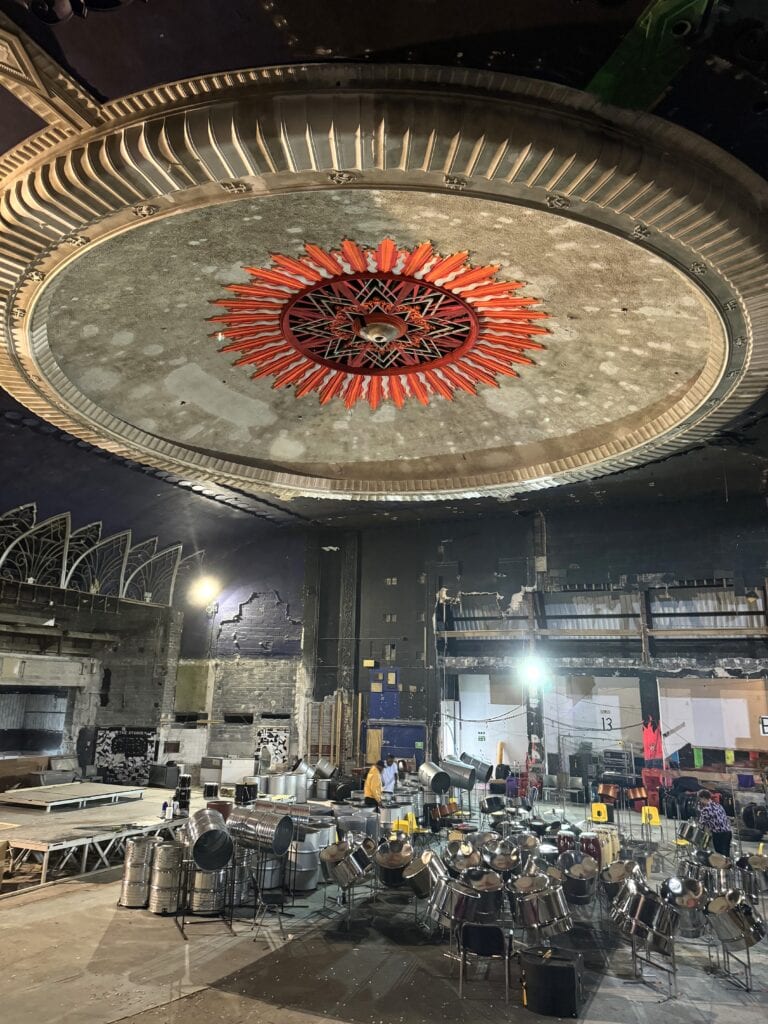
Nudge’s success here is not just about bricks and mortar—it’s about giving people a place where they can gather, work, and enjoy moments together. They’ve already hosted events, student tours, and even music video shoots in the space. “It’s early days, but the impact is already showing,” Wendy said.  

Wendy was keen to emphasise how critical this funding has been for their growth. “Rank has been brilliant. They’ve given us flexibility, trust, and the ability to take risks. The 0% interest repayable grant has allowed us to focus on our mission without the burden of traditional financing.” 

Another exciting project we toured was Club 103, an iconic building that had been in disrepair for years. The space is being restored and will be used by local organisations working with young people, along with an indoor urban farm that will create food, training opportunities, and local jobs. The other half of the building will be housing for young people. “It’s going to take time, but we knew we had to do something,” Wendy said, “because buildings like these hold so many memories and can offer so much opportunity.” 

At the heart of Nudge’s work is the belief that small actions can lead to big change. Their projects aren’t just about developing buildings but about creating lasting social, economic, and cultural ripples across Plymouth.  

As we left, Wendy reflected on their partnership with Rank, saying, “The beauty of working with Rank is the trust. We listen, we share, and together, we’re making a huge difference.” 

Pollenize CIC: Leading the way in pollinator conservation 

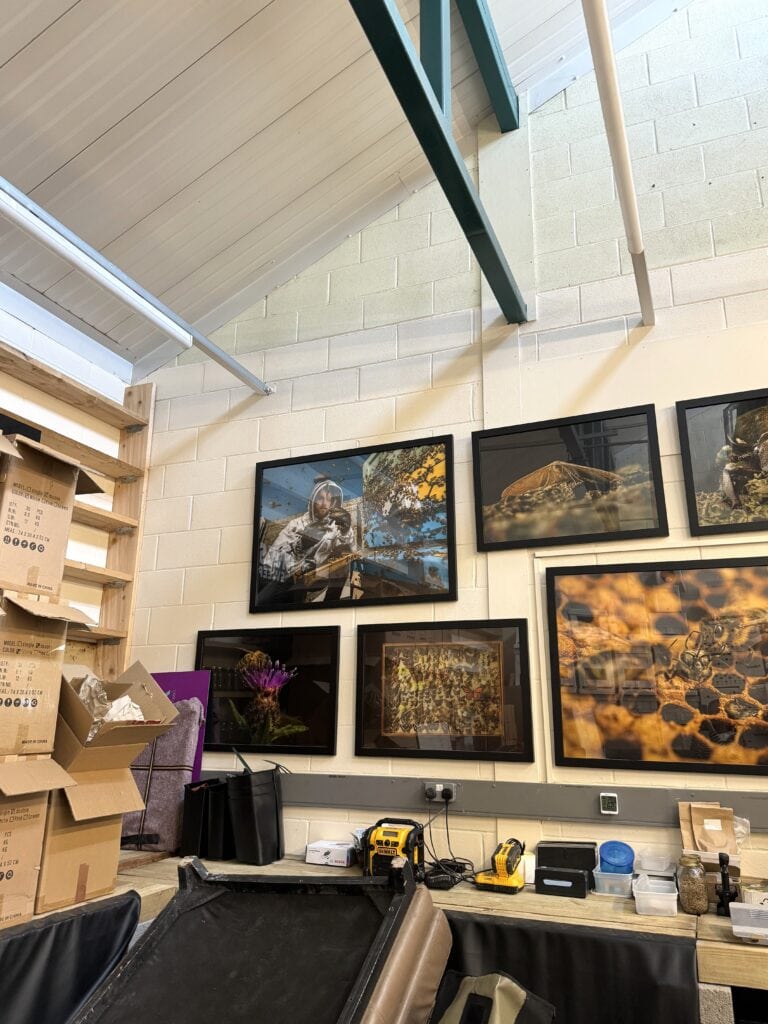
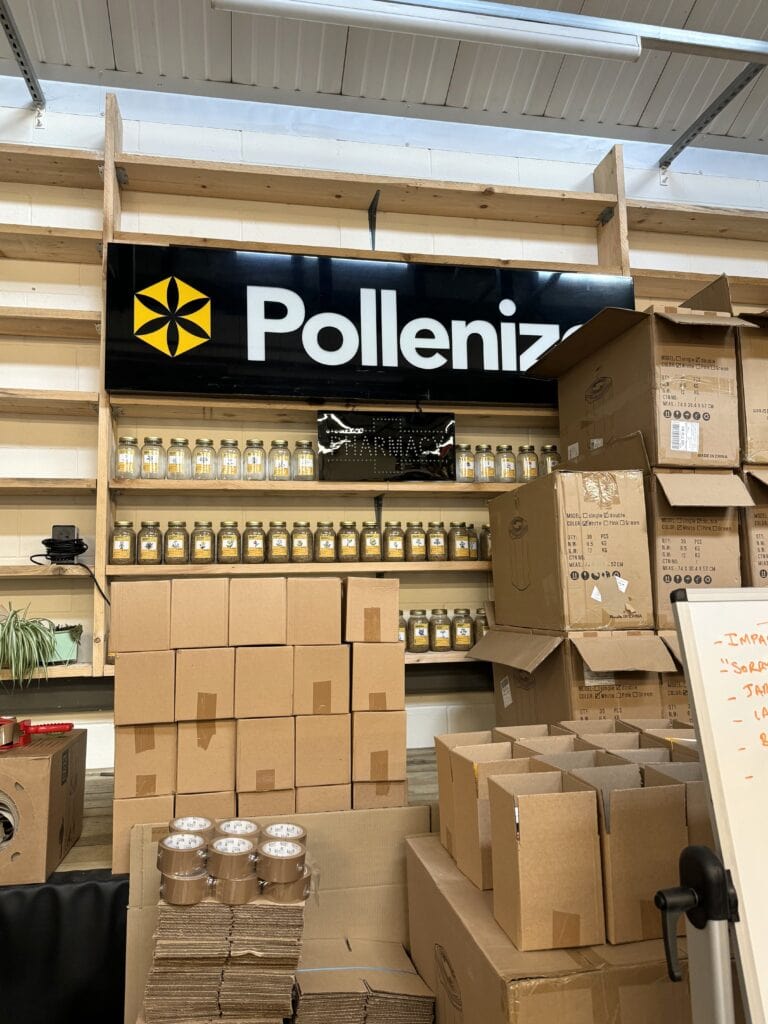
Our third visit took us to Pollenize CIC, where we met Owen, co-founder of this pioneering social enterprise. Pollenize is on a mission to save pollinators—like bees, moths, and butterflies—through community-led conservation and cutting-edge technology. With a repayable grant of £18,000 from Rank, Pollenize has been able to increase its capacity and deepen its impact in preserving pollinator habitats and educating the community about their crucial role in the environment. 

“What we do is relatively unique,” Owen shared. “From the start, we could see there was more value in keeping bees than just for their honey. We now see the future role of beekeepers as scientists and the gatekeepers of bee knowledge.” 

Pollenize’s mission has evolved to harness the power of both community action and scientific research. With partnerships across academia and the use of AI technology, they are developing new ways to monitor and protect pollinators. For example, they’ve launched an AI-powered tool called Floradex, which helps landowners and businesses create pollinator-friendly habitats by analysing their land’s potential. 

Owen showed us their newest innovation, the Nest Sweeper, a game-changer in the fight against the invasive Asian hornet. He also gifted us one of Pollenize’s flagship products, their native wildflower seed packets, designed to help restore pollinator habitats. Community members can take part in a citizen science project by logging their planting efforts on Pollenize’s interactive rewilding map. Through this, Pollenize is encouraging local communities to plant wildflowers and create thriving mini-meadows across Plymouth. 

“We’re part of the bigger picture,” Owen said. “Through conservation, education, and community engagement, we can make small behaviour changes that benefit the environment on a large scale.” 

Since receiving the grant, Owen and Matthew used the investment to dedicate more time to the organisation. The grant has also allowed them to purchase more seeds, further expanding their wildflower planting efforts. Pollenize has also secured an additional £33,000 in income through collaborations and partnerships. They’ve distributed over 1,400 seed packets and planted 2,000 square metres of wildflower meadow in Plymouth alone. 

Despite their growth, there is still more work to do. “I want to grow our team, but it’s difficult at the moment,” Owen admitted. “We need more capacity building to keep up with the demand for our products and the potential of our research.”  

“The trust in us that has been shown is very important,” Owen said, reflecting on their partnership with Rank. “This repayable grant encourages us to keep developing our social enterprise model.” 

With their innovative solutions and strong community engagement, Pollenize is well on its way to becoming a leader in pollinator conservation. Their journey, which started with a love of local honey, has grown into something far more impactful. 

Four Greens Community Trust: A van driving community change 

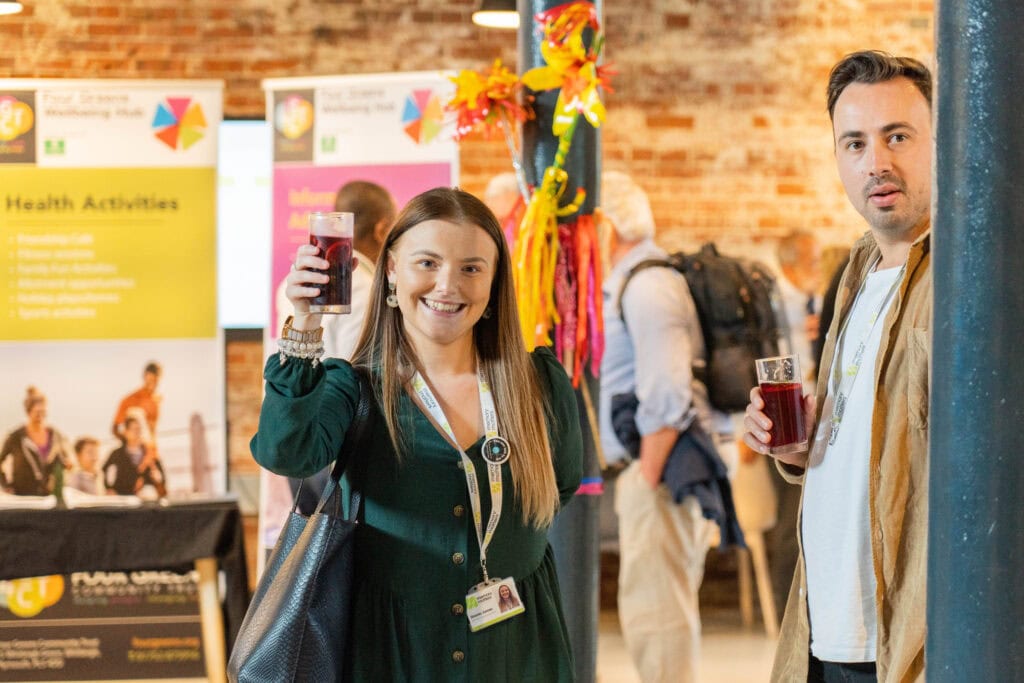
Our final stop was at Four Greens Community Trust (FGCT), where we had the pleasure of chatting with Mark, the CEO. Mark’s warm and friendly welcome made the visit feel more like catching up with an old friend than a formal meeting. He shared with us the amazing work FGCT does to uplift the local community, tackling issues like poverty, social isolation, and health inequalities. 

FGCT is driven by a powerful vision: to eradicate poverty and inequality within their community. Their mission is to work with local partners to offer services and opportunities that promote economic regeneration. What really stands out is their commitment to making sure everyone in the community benefits, with a particular focus on young people, the elderly, people with disabilities, and minority groups. 

A central theme of our conversation was the importance of their new pizza and catering van, made possible by a £60,000 repayable grant from Rank. Partnering with Plymouth Argyle Community Trust (PACT), FGCT has launched a pizza and food catering van. This isn’t just any food truck—this van is staffed by young people who’ll get hands-on experience in the catering business, learning valuable skills while earning an income. Mark described it as “more than just selling pizza. It’s about social interaction and giving young people a real chance to learn and grow.” As he said, “The van is just the beginning. It’s a catalyst for something much bigger.” 

The repayable grant programme gave FGCT the flexibility they needed to launch this project, which would have been impossible through a traditional bank loan. “We found the timing perfect,” Mark said, “and the relationship we’ve built with Rank has been key. Their support is what made this happen.” 

Mark also highlighted the ethical side of the grant. The focus isn’t just on financial return but on creating real community impact. FGCT hopes to pay back the grant while continuing to make a difference, especially for those struggling with food poverty, mental health challenges, and isolation. Through their work at the community centre, café, and garden projects, they offer support in many areas, from financial advice to food bank access. 

Reflecting on the collaboration, Mark described Rank as the catalyst for all this positive change. “We wouldn’t have gotten here without Rank,” he said, “and this partnership is making a big difference, not just for us but for other organisations in Plymouth too.” 

With FGCT’s strong community focus and the support of partners, it’s clear they’re on a path to achieving their mission of eradicating poverty and isolation, one project at a time. 

Final thought 

For me, this trip was more than just a series of meetings—it was a reminder of why we do what we do. It was amazing and inspiring to see how each organisation we visited is driving real, tangible change in the communities they cherish.  

What I took away from this experience is the importance of relationships—whether that’s between foundations like ours and the people we fund, or between the social enterprises and the communities they serve. It’s clear that the repayable grants programme does more than provide financial support. It enables these organisations to thrive, grow, and continue making a difference. And by repaying their grants, they are also creating opportunities for other organisations in Plymouth. I feel truly honoured to have witnessed this firsthand. 

Get in touch

Nhung Phung

Nhung Phung | LinkedIn

Filed Under: Place-based News, Plymouth Tagged With: nudge, place-based funding, plymouth, pollenize, repayable grants, trevi

Learning from Plymouth Repayable Grants Programme

July 29, 2024 by Nhung Phung Leave a Comment

Reflections by Caroline Broadhurst, Deputy Chief Executive, The Rank Foundation

Following the publication of a report by Gareth Hart at Iridescent Ideas CIC, Caroline Broadhurst shares insights from our Repayable Grants Programme in Plymouth.

At The Rank Foundation, our commitment to place-based funding has taught us lots over the years. Plymouth is a prime example of how targeted investment in specific places can drive community impact.

The Repayable Grants Programme is part of our broader place-based funding strategy, which we have refined over two decades.

Developing place-based funding

Our journey began in Burnley in 2001, where we responded to a crisis with a cluster of community initiatives. This initial success fuelled our belief in the potential of concentrated, place-based efforts. Over the years, we expanded this approach into Hull, Dundee and then Plymouth.

We’re opportunistic; we zero in on places with potential. Then our strategy revolves around understanding the unique characteristics and aspirations of each place, nurturing local leadership, and catalysing sustainable community development.

Investing in Plymouth

Since 2018 The Rank Foundation has committed around £5m to the coastal city Plymouth.

We chose the city because of the warm collaboration between the city’s public, private and third sector organisations and because it already had a well-established social enterprise infrastructure. It was recognised as the UK’s first Social Enterprise City in 2013.

Building on these achievements, we sought to maximise development and resourcing opportunities for social enterprises so they could collaborate more effectively to address inequalities. Since 2018 we have supported nearly fifty social enterprises and community businesses that address Plymouth’s social, economic and health challenges.

In April 2022, we launched a £220,000 repayable grant fund for Plymouth, aimed at supporting social enterprises and community businesses. This followed a prior investment in Nudge Community Builders, whose repayments helped establish the new fund.

To date, the programme has distributed over £440,000, thanks to the revolving nature of the repayments.

Learning from the Plymouth Repayable Grants Programme

Gareth Hart’s report shows that Plymouth repayable grants were dependent upon trusting relationships and flexibility. They helped improve sustainability because they give recipients the security and confidence to invest in growth.

1. Trusted local relationships and knowledge

A critical success factor was the local nature of the fund. Recipients felt a strong sense of community accountability, knowing that repaying their grants would enable others in Plymouth to benefit. This created a ‘social contract’ that underscored the communal aspect of the funding​.

The presence of local advisory support, provided by partners like Real Ideas and Iridescent Ideas, was invaluable. The supportive environment they created encouraged applications and ensured tailored guidance for each organisation.

2. Flexibility and tailored support

Flexibility in repayment terms, including repayment holidays and zero percent interest, was important but not critical. The terms provided a safety net, allowing organisations to focus on growth without the immediate pressure of financial return​.

Continuous dialogue with grantees enabled us to tailor the support to their evolving needs, ensuring that the funding model remained responsive and effective. It also meant there were no surprises for us if an enterprise needed a payment holiday.

We wouldn’t have been able to do that without our local Associate, Phil Davies, and the local advisory support.

3. Sustainability and long-term impact

We developed repayable grants to encourage enterprise and to help us leave a legacy in Plymouth.

While the current financial climate has threatened the resilience of almost every organisation within our Network, our aim is to support long-term community resilience and sustainability not reliance on grants. The Repayable Grants Programme is one response to that.

The idea of a revolving fund – where former grantees ‘pay it forward’ to the next generation of social entrepreneurs – ensured that the impact of our investment can continue beyond the initial grant period.

4. Income for impact

The repayable grant model encouraged social enterprises to focus on income-generating activities.

For instance, Pollenize CIC used their grant to increase their capacity, resulting in an estimated £33,000 of additional income and expanded ecological projects across the city​. Other beneficiaries, such as Nudge Community Builders and Trevi Women, reported significant financial growth.

Trevi used the grant alongside other funding, to help purchase and refurbish a building – Blossom House – to support women recovering from trauma and abuse.

Since then, they have secured running costs of over £640,000 from The Ministry of Justice and The Home Office.

What’s next?

The Repayable Grants Programme not only supported individual social enterprises, but we’re told it has strengthened the fabric of the Plymouth social enterprise community, with the ‘pay it forward’ model.

Following feedback from funded organisations, we will explore extending eligibility beyond the Rank Network to increase the potential local impact of this type of funding. Recipients and the local advisory team have also asked us to consider performance-related repayments and leveraging additional match funding to amplify the fund’s impact.

As we continue to refine our approach, we remain committed to sharing our learning and collaborating with other funders to advance the practice of place-based investment. For those interested in exploring place-based funding further or discussing our experiences in Plymouth, I invite you to get in touch.

Get in touch

Caroline Broadhurst caroline.broadhurst@rankfoundation.com

Read the Report from Iridescent Ideas.

[dflip id=”8148″ ][/dflip]

Filed Under: Place-based News, Plymouth Tagged With: iridescent ideas, nudge, place-based funding, plymouth, repayable grants

Blog Post: “Why place?”

June 10, 2024 by Laura Price Leave a Comment

Our place-based funding philosophy and experience

In the first blog in an upcoming series, The Rank Foundation’s Deputy Chief Executive, Caroline Broadhurst shares their place-based funding journey.

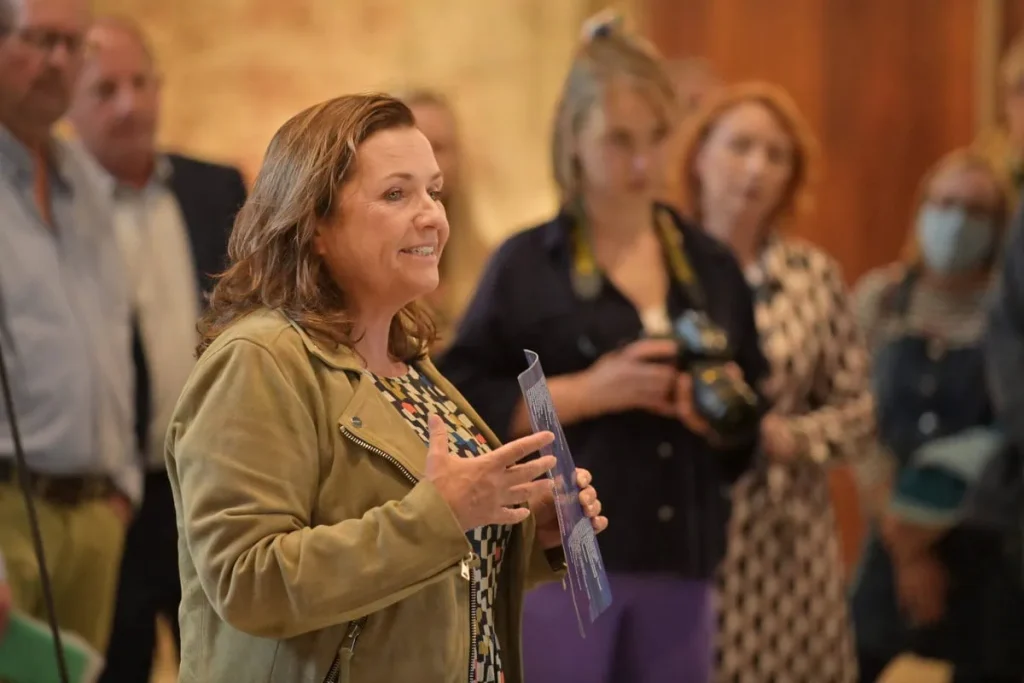
A photo of Caroline giving a speech in Plymouth.

People often ask me about the value of working, and funding, a specific place. Be it a town, city, or region.  

At The Rank Foundation, we’ve learned a lot about place-based programmes over the last two decades and, mindful that every place is one of a kind, we can draw on our experience to share why we think place-based investment is most definitely worth it.

How it started

The Rank Foundation’s place-based journey began in the north of England. In 2001, the East Lancashire Mill town Burnley, saw interracial violence erupt, causing an estimated £1 million worth of damage. Working alongside the police, we funded a cluster of community initiatives, and it showed us the potential of concentrating time, knowledge and funding in a place. 

Since then, our typical entry into an area has taken a more optimistic and opportunistic stance. Burnley gave us the confidence to approach leaders in small cities to explore where we could add value to collective aspirations and ambitions for the future.

Today, we’re invested in three cities: Hull, Dundee and Plymouth with a fourth on the horizon.

Our place-based funding starts with an open mind and a curious outlook:  

  • What is good about the place?  
  • What do the residents love about it?  
  • How can perceived challenges be overcome, opportunities identified, and aspirations achieved?
  • Who’s doing great work already? 

We take the time to get to know a place, not from a distant desk, but by visiting regularly, over an extended period of time.  We call this approach (metaphorically) “kicking the tyres” but it’s not about ticking boxes and finding our favoured characteristics before committing.

Our tyre kicking involves, meeting with community leaders, influencers, disrupters, and social entrepreneurs, who share a vision to create a better, more inclusive place to live and work.  And then we ask them if we can help to shape that vision, from concept to reality. 

How do we decide to work in a place?  

From the extended period of reconnaissance, getting to know the movers and shakers, we work in places that are ‘riding the crest of a wave’.  Of course, this is more art than science but our experience in Hull, Dundee, and Plymouth demonstrates that the heady mix of shared optimism, economic opportunity, a caring community, and a can-do approach, prepares the ground for a fruitful collaboration between philanthropy, the economy and society.

While the reconnaissance period is critical to identifying the place, our real work starts once the funding is approved.  In addition to financial resources, we convene local partners, encourage collaboration, connect with other funders and supporters, enable local leadership and decision-making. Through the lynchpin of the place-based associate director, we stay local throughout the programme, spotting opportunities to ensure that the whole is much, much greater than the sum of its parts.

Like all good things, each place-based programme has a beginning, middle and an end.  At the beginning, we work with local leaders across sectors to agree a way of working, such as the HEY 100 in Hull, Food Insecurity Network in Dundee, the Plymouth RISE programme or Participatory Grant Making.  

We recruit an associate director, who works alongside the community to identify their ‘north star’: a shared destination and how to get there. 

By the middle phase, each programme has evolved with its own identity and with participants who own, adapt and mould it.  And by the end there is a vibrant, confident, and strong network of individuals and organisations who carry on the work, and their shared vision to make their place an ever better one, for everyone.

We continue to learn, and share, about what works in place.  But we are not alone!  For decades there have been place-based funders including community foundations and place-based giving schemes. More recently, interest has increased from national funders.  Collectively, we are supported by learning organisations like Place Matters and we use different tools and techniques to measure progress and impact, such as Upshot.  

Working in place takes time. Funders with a curiosity about the process of social change, the privilege of patience to invest over time, and the resources to share with or give to others, should consider this way of doing business. 

I’ll share more soon about what we’re learning from our place-based funding in Plymouth.

Get in touch

If you’d like to discuss the ideas in this blog, please contact us at: contactus@rankfoundation.com

Filed Under: Dundee, Hull, Place-based News, Plymouth

Ripples Story: “The spirit of enterprise”

January 4, 2024 by Nhung Phung Leave a Comment

In this article, Alan Qualtrough, Editor at The Stonehouse Voice CIC, discusses how the Rank Network has fostered a flourishing social enterprise network and entrepreneurship in Plymouth.

Nudge Community Builders

The Rank Foundation’s focus on Plymouth sowed the seed of enterprise, which has blossomed vigorously. Enterprises run by individuals or small teams have flourished, as have larger organisations such as Nudge Community Builders, who specialise in bringing abandoned buildings back to life. Nudge focuses on Plymouth’s Union Street, which they have made one of the most exciting UK streets for urban regeneration. Their mission to transform derelict buildings into community spaces has been a great success. They have reclaimed more than 4,000 square metres of abandoned structures, a remarkable 37% of the empty buildings on Union Street. And the Rank Foundation has been with them every square metre of the way.

One of Nudge’s most recent acquisitions is the former C101 nightclub, which has been derelict for many years. The other is the Millennium, a vast landmark building and architectural Art Deco gem at the very edge of the city centre. Nudge was able to buy the Millennium with Art Work Eat and with the support of The Rank Foundation and Power to Change. Coincidentally, the building was a former Gaumont cinema built by Arthur Rank in 1931 to show his films about Methodism.

Nudge was set up in September 2017 after Hannah Sloggett and Wendy Hart had been Chair and Vice Chair of Stonehouse Action for 10 years and realised the importance ownership has in how communities can change. The pair immediately started reclaiming a shop that had stood derelict for years. After volunteers rebuilt and restored it, it’s now called Union Corner, a thriving community hub.

A pub called The Clipper was next to be ‘nudged’. Then came The Plot, an abandoned warehouse space now crammed with small enterprises and a food hall. Planning permission has been granted to turn the Millennium’s ground floor into eight medium-sized workshops. Although the building has yet to be cleared out, future plans for C103 include social housing and a hydroponic farm.

When Nudge set out in 2017, they received a re-cyclable grant loan from Rank that set them on their way and replaced the neglect and dereliction with energy and enterprise. “ Without Rank, we wouldn’t have started, “ says Wendy.

Pollenize CIC

It’s unusual for a social enterprise to work in the scientific field— especially one so critically important to humanity—but Pollenize is making a success of it. In 2018, best friends Matt Elmes and Owen Finnie failed to find local honey to relieve hay fever symptoms. They sought innovative and accessible ways to keep honeybees in urban landscapes. They say the rest is history (and the future).

After developing a business plan and undertaking apiculture training, Pollenize set up a network of 11 community beehives with native honeybees across Plymouth landmarks. Public members could get involved and share the honey crop each year. Pollenize used this to create a lasting positive impact in the city. In 2020, Owen participated in the Plymouth Rise programme and was coached in all aspects of social enterprise.

Five years on, Pollenize has a team of 12 and has been on an incredible journey with bees, moths, and butterflies. They are investigating their vital role in a healthy planet and, most importantly, what we can do as humans to protect bees. Through academic partnerships, innovation, and AI technology, Pollenize is developing ways to track and improve biodiversity, allowing insects to recover and our environment to flourish. As a result, the social enterprise has gained tremendous momentum. It has become a key player in driving environmental research and social change within the city and beyond.

Their energy and enterprise are impressive. Last year, they raised £119,750 in funding and distributed 1443 seed packets, with 2,000 square metres of wildflower meadow created. A total of 44 individuals joined them for community beekeeping, five bee hotels were installed across Plymouth, and two innovative products were launched – Floradex and Hornet AI.

Floradex is part of their Tech for Good campaign, which was developed in collaboration with the University of Plymouth. It is an AI-powered tool that empowers landowners and businesses to create pollinator-friendly habitats. The Nest Sweeper Project is their most recent crowdfunding campaign involving fighting the invasive species, the Asian hornet.

As they expand nationally, Pollenize now collaborates with farms across the UK, installing research beehives and moth boxes to monitor pollinator health.

Bikespace CIC

In 2010, Gareth Thomas gave up his full-time teaching job to offer an alternative learning route to pupils excluded from school. He hired a small industrial unit in Devonport, Plymouth. He set up Bikespace, a social enterprise that uses bicycles for social and environmental good.

By the time you have read this story, Gareth will have moved to Madrid, where his wife is to work as a full-time teacher. But he will have left behind a remarkable legacy. In recent months, when he was organising his move to Spain, he transferred the organisation to a Worker Cooperative and will no longer be involved. “I’m very confident they will succeed,” Gareth says. The full-time Bikespace employees will take the reins and appoint directors; all have equal rights.

Hard work and enterprise are behind Gareth’s success story, but the Rank Foundation helped. Gareth participated in Rank’s Rise programme in Plymouth, which equipped him with the enterprise skills to move forward. He says, “The Rise programme gave me the confidence and network to pursue more significant contracts. I worked with a fellow Rise participant, Dataplace, to scope out markets. I got a lot of insight from a Witness Statement from Co Cars, Exeter. The first contract Bikespace won after the Rise programme was a Trail Therapy scheme during which participants learn basic bicycle repair skills and set off on weekly off-road cycling trips in all weathers. At the programme’s start, they receive a helmet, jacket, gloves, and a recycled bike to keep.

A more lucrative outcome soon followed. Gareth won a contract to operate a Beryl Bike e-bike network in Plymouth, which has 510 bikes and 40 in Saltash, Southeast Cornwall. It is the second-most extensive e-bike network in the UK, and it has meant hiring nine full-time staff to maintain and repair the bikes and moving to a larger industrial unit. “The Rank Rise programme forced me to go networking, and it worked,” says Gareth.

In Plymouth, the initial Rank ripples of 2017 are turning into a torrent of positive social change.

Alan Qualtrough

Editor at The Stonehouse Voice CIC

Filed Under: Place-based News, Plymouth Tagged With: beehives, bikespace cic, entrepreneurship, nudge community builders, plymouth, pollenize cic, Social Enterprise

Thriving Plymouth event

October 3, 2023 by Laura Price

Evaluating year 1 of the Participatory Grant Making Fund.

Last week Plymouth welcomed over 100 guests to a celebratory event hosted by Real Ideas at the Devonport Market Hall. It was a fantastic opportunity for our Chair, Joey Newton to present certificates to the ten participants who recently completed the School for Social Entrepreneurs’ Match Trading programme – the third cohort in Plymouth to do so, which means there are now 30 SSE fellows who are part of the local Plymouth Rank Network.

The occasion also marked the end of the first year of the enormously successful thirteen projects supported by Rank’s Participatory Grant Making fund.

This brochure gives a flavour of the projects’ achievements as they address and combat loneliness and social isolation in the city.

Finally, the event was an opportunity to celebrate supporting the next round of Participatory Grant Making projects with Livewell’s CEO explaining to the audience why they had committed £500,000 to match fund the loneliness and social isolation projects.

It was great to see the commitment and the energy in the room – it was a really inspiring afternoon.

Filed Under: News, Place-based News, Plymouth

Rank launches Plymouth Participatory Grant Making Programme

November 4, 2021 by Noah Somorin

Further to the launch of Phase two of the RFL Plymouth place-based programme, applications are now open for the Plymouth Participatory Grant Making fund.

This fund will be exclusively open to Plymouth RankNet member organisations*.

Since 2018, the Rank Foundation has invested some £2.5m in supporting Plymouth’s vibrant social purpose sector. More recently, Rank’s Board of Trustees has restated its commitment to Plymouth by approving a second phase of their place-based investment.

Over the next three years, the Foundation will be supporting a number of initiatives but the principal one is a commitment to addressing the issues of loneliness and isolation in the City.

To that end, Rank has committed £1m over the next three years to support projects delivered by social purpose organisations which are designed to address and combat loneliness and social isolation.

Plymouth RankNet member organisations are invited to apply for a grant of up to £30,000 per annum for a period of up to two years. A further year’s funding may be available after the initial two-year period depending on the availability of funding and on the priorities at that time.

Applications for smaller projects with a shorter delivery time are welcome.

For further details, please refer to the programme prospectus

Plymouth RankNet member organisations can apply for the Participatory Grant Making Fund under ‘Opportunities’ on RankNet.

To support your application, you will need to upload a completed budget template, and a partnering organisations template if this is a joint application.

Please refer to The Terms and Conditions of the fund before applying.

* Whilst the fund is only open to Plymouth members of RankNet, organisations can collaborate with other projects outside of the network. A Plymouth RankNet organisation must be the lead partner.

Filed Under: News, Place-based News, Plymouth

  • Page 1
  • Page 2
  • Page 3
  • Page 4
  • Go to Next Page »

Primary Sidebar

Recent Posts

  • Rank Network visit to Northern Ireland: Backing local leaders, building stronger communities
  • Rank Ripples – Spring 2025 Edition
  • Ripples Story: “Investing in Experience”
  • Blog Post: “­My time at the Rank Foundation: Supportive Leadership”
  • Blog Post: “A New Chapter – My First Steps as a Time to Shine Leader”

Recent Comments

  1. Covid19: Funding support available in Torfaen | TVA - Torfaen Voluntary Alliance on COVID-19 Update

Archives

  • May 2025
  • April 2025
  • March 2025
  • January 2025
  • December 2024
  • November 2024
  • October 2024
  • September 2024
  • August 2024
  • July 2024
  • June 2024
  • May 2024
  • April 2024
  • March 2024
  • February 2024
  • January 2024
  • December 2023
  • October 2023
  • August 2023
  • July 2023
  • June 2023
  • May 2023
  • April 2023
  • March 2023
  • January 2023
  • October 2022
  • May 2022
  • April 2022
  • February 2022
  • January 2022
  • November 2021
  • October 2021
  • April 2021
  • December 2020
  • November 2020
  • October 2020
  • September 2020
  • August 2020
  • July 2020
  • June 2020
  • May 2020
  • April 2020
  • March 2020
  • October 2019
  • August 2019
  • July 2019
  • May 2019
  • April 2019
  • March 2019
  • January 2019
  • December 2018
  • October 2018
  • August 2018
  • July 2018
  • May 2018
  • April 2018
  • March 2018
  • February 2018
  • July 2017
  • May 2017
  • March 2017
  • January 2017
  • December 2016
  • November 2016
  • October 2016
  • September 2016
  • August 2016
  • July 2016
  • June 2016
  • May 2016

Categories

  • Community Action Placement
  • Coworking Space
  • Dundee
  • Enterprise
  • Fellowship
  • Hull
  • Leadership
  • News
  • Place-based News
  • Plymouth
  • Profit for Good
  • Rank Aspire Programme
  • RankNet
  • School Leadership Award
  • Start Here
  • Sunderland
  • Time to Shine

Language

  • Cymraeg
Rank-Foundation-Logo
  • About Us
  • Our Approach
  • Where We Work
  • Coworking Space
  • News
  • Contact
Sign in to RankNet

For enquiries about our
Coworking Space in London:

booking@rankfoundation.com

For Rank Network members:

ranknet@rankfoundation.com

For all other enquiries:

contactus@rankfoundation.com Please note we don't accept unsolicited applications for funding.

© 2026 The Rank Foundation.
All rights reserved.

Privacy Policy  Cookies  Complaints Policy

Made by erjjio and powered by
100% renewable energy

Green_Website_Black (2)
Manage Consent

To provide the best experiences, we use technologies like cookies to store and/or access device information. 

Functional Always active
The technical storage or access is strictly necessary for the legitimate purpose of enabling the use of a specific service explicitly requested by the subscriber or user, or for the sole purpose of carrying out the transmission of a communication over an electronic communications network.
Preferences
The technical storage or access is necessary for the legitimate purpose of storing preferences that are not requested by the subscriber or user.
Statistics
The technical storage or access that is used exclusively for statistical purposes. The technical storage or access that is used exclusively for anonymous statistical purposes. Without a subpoena, voluntary compliance on the part of your Internet Service Provider, or additional records from a third party, information stored or retrieved for this purpose alone cannot usually be used to identify you.
Marketing
The technical storage or access is required to create user profiles to send advertising, or to track the user on a website or across several websites for similar marketing purposes.
Manage options Manage services Manage {vendor_count} vendors Read more about these purposes
View preferences
{title} {title} {title}